
Reception
Welcome to Reception
Mrs Newman and Mrs Dinnis
We look forward to welcoming you to our first exciting half term.
Our topic this half term is 'Ourselves'
Reception Curriculum
We will be learning across all seven areas of learning through our topic of ourselves. The children will learn through a new text, either fiction or non-fiction, each week with activities matched to it. Below are some of the new things we will be learning.
In Literacy we will predict the content of stories, develop phonics and hear all sounds in 3-letter words and show an awareness of and use some conventions of writing
In Communication and Language, we will develop speaking and listening skills, learn how to follow simple instructions and listen to and respond to others.
In maths we will know numerals to 3, write them and count objects up to 3 and find more than / less than a number. We will also name 2D shapes and look at and recreate patterns.
In Physical Development we will practise pencil control – nip flip grip, and knead and mould Plasticine and dough. We will explore a wide range of movements through PE and show some awareness of space.
In Personal, Social & Emotional Development (Jigsaw), we will take turns and share and develop our independence by finding our own belongings and we will share experiences and feelings.
In Expressive Arts & Design, we will use imagination in collaborative role play and sing songs to do with ourselves. We will experiment with colour-mixing, use white and black to lighten/darken colours and discover how instruments can be played.
In Understanding the World, we will talk about seasonal changes and make a personal timeline of own life. We will find out about and identify features in the place where they live and talk about Divali / Eid / Harvest celebrations. We will talk about different body parts and look at similarities and differences between materials.
We look forward to seeing our young learners grow and develop their knowledge and understanding of space. If you have any questions or would like to volunteer for our space-themed activities, please do not hesitate to reach out to us.
Thank you for your continued support and cooperation.
Homework
Homework will be assigned on a weekly basis and will primarily focus on developing writing independence. These tasks will be light and manageable, designed to prepare the children for the challenges of the upcoming year. Please see email detailing homework this term.
Important dates this term:
Monday & Friday - Changing reading book
Friday - Homework sent out and to be returned the following week
Thursday - PE kit - Children will get changed into ther kits at school
This half term our focus for PSHE is 'Being Me In My World'

During the year Jigsaw Jenie helps us with our personal, social and emotional understanding. Through our Jigsaw unit on Being Me In My World, children will engage in several key topics designed to foster emotional intelligence and interpersonal skills.
Children are encouraged to think about how they can help others to feel welcome and make reception a better place to be.They think about everyones right to learn and follow the learning charter. Children also learn to care about others feelings ad how to work well with others.
Press here to access the website - health for kids.
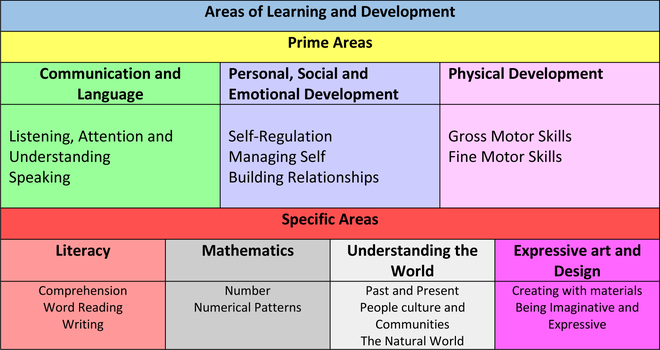
The EYFS framework includes Seven Areas of Learning that are equally important and inter-connected. Three areas are particularly important for sparking enthusiasm for learning and forming relationships.
The Prime Areas of Learning:
- Communication and Language
- Physical Development
- Personal, Social and Emotional Development
The prime areas are strengthened and applied through four Specific Areas of Learning:
- Literacy
- Maths
- Understanding the World
- Expressive Arts and Design
Characteristics of Effective Teaching and Learning
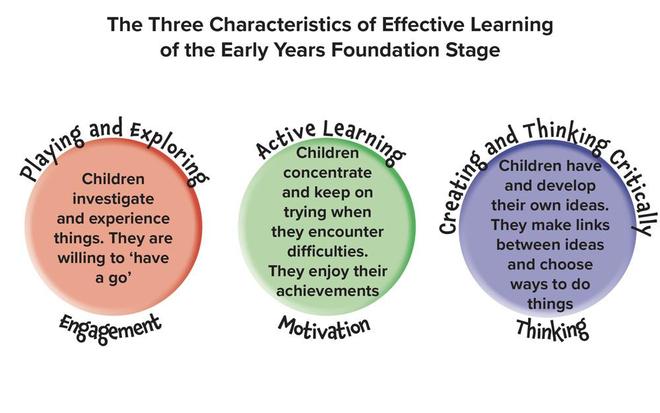
In addition to addressing all seven Areas of Learning, our curriculum is designed to promote the Characteristics of Effective Learning. These characteristics describe how the children will learn. These learning behaviours are particularly important in the EYFS because they build the foundations for children to be lifelong learners. The characteristics are:
- Playing and Exploring - Engagement
- Active Learning - Motivation
- Creating and Thinking Critically - Thinking
Planning and Assessment
We offer the children in Reception a ‘hands-on’ play-based curriculum, both indoors and outdoors, throughout the day. Planning can be intentional, responsive, or anticipatory. It is flexible and can change in response to children’s ideas and interests. Planning may also be linked to events in the community or around the world.
“Play is essential for children’s development, building their confidence as they learn to explore, relate to others, set their own goals and solve problems. Children learn by leading their own play, and by taking part in play which is guided by adults.”
Statutory framework for the Early Years Foundation Stage.
In addition to the activities planned by the adults, the children are offered plenty of opportunities to direct their own learning.
All children starting Reception will take part in the Reception Baseline Assessment. Please see the information for parents document produced by the DfE below to explain the process.
At the end of the Reception Year children will be assessed for the EYFS Profile. Each of the seven areas will be further broken down into the following categories.
To practise phonics, the children can access Mr Thorne’s Phonics on YouTube: https://www.youtube.com/@MrTsPhonics/playlists
This is free of charge and the 5 minute videos will give the children a reminder of the sounds they have already learnt but would also enable them to start learning about sounds that are to come in Year 1 if they wanted to.
Games can be accessed on https://www.phonicsplay.co.uk/ and https://www.phonicsbloom.com/
Additional resources are also available below, covering all of the phonics taught so far.
Maths games can be accessed free of charge via Top Marks: https://www.topmarks.co.uk/
The children could also continue to practise number formation, ensuring numbers are correctly orientated, and do practical addition and subtraction, for example using Cheerios for counting. There are also resources below revisiting learning the children have covered this year.
Phonic activities - Phase 2
- Level 2 Week 1 Lesson 1 Parent Information Sheet.pdfPDF File
- Level 2 Week 1 Lesson 2 Parent Information Sheet.pdfPDF File
- Level 2 Week 1 Lesson 3 Parent Information Sheet.pdfPDF File
- Level 2 Week 1 Lesson 4 Parent Information Sheet.pdfPDF File
- Level 2 Week 2 Lesson 1 Parent Information Sheet.pdfPDF File
- Level 2 Week 2 Lesson 2 Parent Information Sheet.pdfPDF File
- Level 2 Week 2 Lesson 3 Parent Information Sheet.pdfPDF File
- Level 2 Week 2 Lesson 4 Parent Information Sheet.pdfPDF File
- Level 2 Week 3 Lesson 1 Parent Information Sheet.pdfPDF File
- Level 2 Week 3 Lesson 2 Parent Information Sheet.pdfPDF File
- Level 2 Week 3 Lesson 3 Parent Information Sheet.pdfPDF File
- Level 2 Week 3 Lesson 4 Parent Information Sheet.pdfPDF File
- Level 2 Week 4 Lesson 1 Parent Information Sheet.pdfPDF File
- Level 2 Week 4 Lesson 2 Parent Information Sheet.pdfPDF File
- Level 2 Week 4 Lesson 3 Parent Information Sheet.pdfPDF File
- Level 2 Week 4 Lesson 4 Parent Information Sheet.pdfPDF File
- Level 2 Week 5 Lesson 1 Parent Information Sheet.pdfPDF File
- Level 2 Week 5 Lesson 2 Parent Information Sheet.pdfPDF File
- Level 2 Week 5 Lesson 3 Parent Information Sheet.pdfPDF File
- Level 2 Week 5 Lesson 4 Parent Information Sheet.pdfPDF File
- Level 2 Week 6 Lesson 1 Parent Information Sheet.pdfPDF File
- Level 2 Week 6 Lesson 2 Parent Information Sheet.pdfPDF File
- Level 2 Week 6 Lesson 3 Parent Information Sheet.pdfPDF File
- Level 2 Week 6 Lesson 4 Parent Information Sheet.pdfPDF File
Phonics Resources
- level-2-s-a-t-p-i-n-m-d-g-o-c-k.pdfPDF File
- level-3-j-v-w-x.pdfPDF File
- level-3-ai-ee-igh-oa-oo-oo-ar-or-ur-ow-oi.pdfPDF File
- level-3-ear-air-ure-er.pdfPDF File
- level-4-booklet-1-cvcc-words.pdfPDF File
- level-4-booklet-2-ccvc-words.pdfPDF File
- Ready-to-Progress-Addition-and-Subtraction.pdfPDF File
- Ready-to-Progress-Number-Facts.pdfPDF File
- Ready-to-Progress-Shape.pdfPDF File
-
Free eBooks - Sign up to access free eBooks, some of which we use within our reading scheme.
How to support phonics learning at home | Oxford Owl
Understand learning to read using phonics and how to put reading with phonics into practice at home with Emily Guille-Marrett and her son Albie. Find more phonics help on Oxford Owl.
Dental Hygiene:
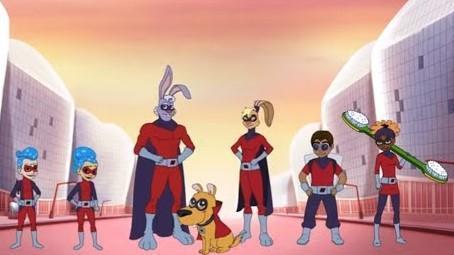
In EYFS, we teach about dental hygiene. The children learn the value of good brushing and how to use toothpaste to fight tooth decay. The Colgate Tooth Defenders help us to learn how to keep ourselves healthy and even give us our own toothbrush and toothpaste to take home!
The Tooth Defenders would like us to complete our brushing chart to make sure that we keep our teeth and gums healthy.
If you need any support for your child or any tips on keeping teeth clean, please see our documents below to help you. Also start taking your child to the dentist….it is never too early to start!
https://startingreception.co.uk/toothbrushing/
Support for potty training
If you need to support your child with toilet training, below are some useful links to get them started. Current advice is to teach your child the skill of using a potty and not waiting for the child to be ready.
To help your child be school ready and get the best start to their education, please follow the link below which supports families through interactive games and conversation starters:
- https://www.beststartinlife.gov.uk/school-readiness
- https://www.facebook.com/SolihullHVs
- https://eric.org.uk/potty-training/
- https://www.solgrid.org.uk/eyc/wp-content/uploads/sites/31/2024/04/037-NW-Toilettraining-December23.pdf
- https://www.nhs.uk/conditions/baby/babys-development/potty-training-and-bedwetting/how-to-potty-train/#close
Parent support for children starting school
-
Starting Reception Your child's journey to school starts at home - Parent information for preparng yourself and your child for Reception.
-
Support for children and parents. - This is a link to a YouTube channel offering practical advice to help children and parents navigate emotions, challenges, and different family life scenarios.
Advice for parents on screen time
The government has set recommendations for 2-5 year olds: Try to keep it to 1 hour a day. Less if possible.
School Readiness information for parents
Parent workshop powerpoint slides from 9th February 2026
Meet the Teacher - presentation and resources
Curriculum Newsletters
- Curriculum Newsletter Autumn 1 - ReceptionPDF File
- Curriculum Newsletter Autumn 2 ReceptionPDF File
- Curriculum Newsletter Spring 1 - Out and AboutPDF File
- Curriculum Newsletter Spring 2 - SuperheroesPDF File
- Curriculum Newsletter Summer 1 - Reception MinibeastsPDF File
- Curriculum Newsletter Summer 2 - YR SpacePDF File
Snow day school closure:
Snow Day Home Learning
If we have a snow day, here are some simple activities you can enjoy with your child to keep their learning going at home:
-
Phonics & Reading: Practice reading and writing the tricky words for your child’s current phonics phase. You can extend this by encouraging them to use tricky words in short sentences. Please also revisit the personalised phonics targets sent home last term. Enjoy some shared reading together and remember to record this in their reading book.
-
Maths: Support your child in practicing number formation to 10. You can also explore simple addition number sentences using the + and = symbols.
-
Understanding the World Make the most of the snowy weather—build snowmen, explore outside, and chat about how snow is formed and what happens when it melts.